
Dental Sealants: The Invisible Shield for your Kids' Teeth
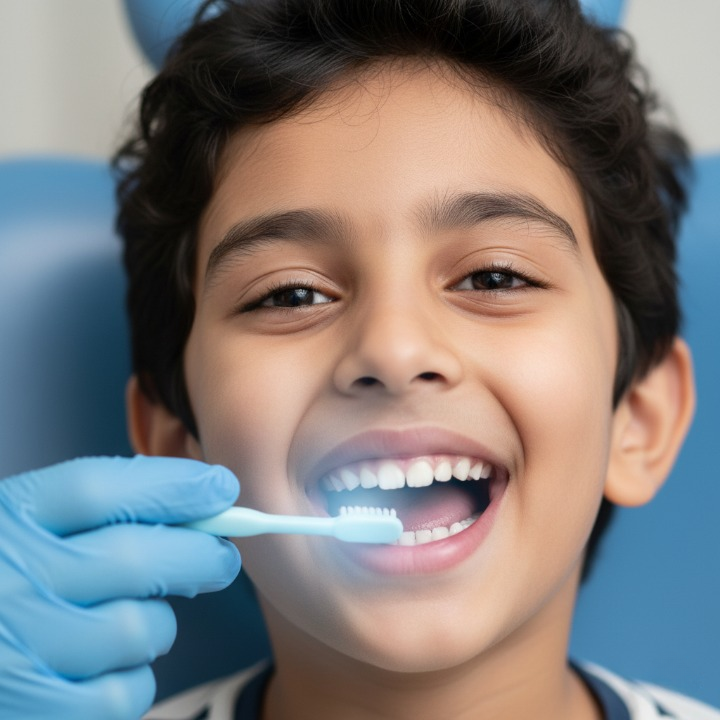
Introduction: Your Secret Weapon in the Fight Against Childhood Cavities
As a parent, you do everything you can to protect your child. You make them wear a helmet, slather on sunscreen, and insist on vegetables. But are you protecting the most cavity-prone part of their teeth?
The deep grooves and pits on the chewing surfaces of molars are a magnet for food and bacteria, making them notoriously difficult to clean with a toothbrush alone. This is where dental sealants for kids come in—a simple, quick, and powerful way to give your child’s teeth an extra layer of defense.
What Are Dental Sealants? The "Invisible Shield" Explained
Think of a dental sealant as a miniature, invisible raincoat for your child’s teeth. It’s a thin, protective plastic coating that is painted onto the chewing surfaces of the back teeth (premolars and molars).
The sealant quickly bonds and hardens, forming a smooth, protective shield over the natural, grooved anatomy of the tooth. This prevents food particles and cavity-causing bacteria from getting stuck in those vulnerable areas.
The 4-Step Process: What Getting Sealants is Really Like
The process is straightforward, painless, and requires no drilling or anesthesia.
Cleaning: The tooth is thoroughly cleaned and dried.
Prepping: A special gel is applied to the tooth’s surface for a few seconds to create a strong bonding surface. The tooth is then rinsed and dried again.
Application: The liquid sealant is carefully painted onto the grooves of the tooth.
Hardening: A blue curing light is used to harden and bond the sealant to the tooth, creating that durable, invisible shield.
The entire process for one tooth takes just a few minutes.
Why Sealants Are a Game-Changer for Kids' Dental Health
Highly Effective: According to the CDC, sealants can prevent up to 80% of cavities in the back teeth for up to 2 years and continue to protect against 50% of cavities for up to 4 years.
Cost-Effective Prevention: The cost of applying dental sealants for kids is far lower than the cost of treating a cavity with a filling. It’s one of the most cost-effective preventive measures in dentistry.
Perfect for Growing Molars: They are typically applied as soon as the permanent molars erupt (around ages 6 and 12), protecting them during the most cavity-prone years.
FAQs About Dental Sealants
The first set is usually applied when the first permanent molars erupt, around age 6. The second set is applied when the second permanent molars come in, around age 12.
Sealants can last for up to 5-10 years. They are checked during regular dental check-ups and can be reapplied if they show signs of wear.
Yes, sealants are very safe. They have been used for decades and are made from dental-grade materials that are completely biocompatible.
Absolutely. Sealants only protect the chewing surfaces. Brushing twice a day with fluoride toothpaste and daily flossing are still essential to clean the sides and between the teeth where cavities can also form.
In some cases, yes. If a cavity is in its very early stages and only in the enamel, a sealant can be used to trap the bacteria and stop the decay from progressing. Your pediatric dentist will determine if this is the right approach.