
Your Baby's First Tooth: A Timeline and What to Expect
Introduction: Celebrating a Major Milestone
That gummy smile is one of the most beautiful sights, but the arrival of your baby’s first tooth is a monumental milestone—for both of you! It’s a sign of healthy development, but it can also be a source of anxiety and sleepless nights.
When will it happen? What are the real teething symptoms? And how do you care for this new little pearl? As your dental family, we’re here to guide you through this exciting phase with a clear timeline and practical advice to ensure your baby’s smile gets a healthy start.
The Teething Timeline: A Guide to What Appears (and When)
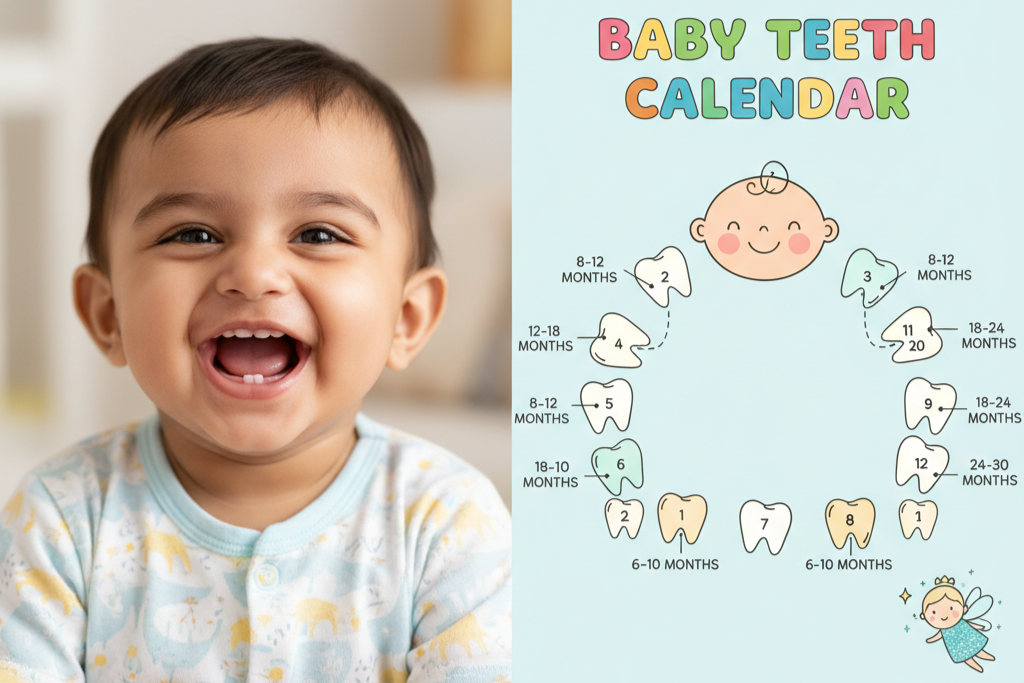
While every child is unique, teeth generally follow a predictable pattern. This teething timeline gives you a roadmap, but don’t worry if your baby is a little early or late!
6-10 Months: The grand debut! The lower central incisors (the bottom front teeth) are almost always the first to appear.
8-12 Months: Next come the upper central incisors (the top front teeth).
9-13 Months: The upper lateral incisors (the teeth on either side of the front teeth) make their entrance.
10-16 Months: The lower lateral incisors come in, completing your baby’s adorable eight-tooth front smile.
13-19 Months: The first molars arrive. These are the wider back teeth, and they can be uncomfortable due to their larger surface area.
16-23 Months: The sharp canines (the “eye teeth”) emerge to fill the gaps.
23-33 Months: Finally, the second molars come in at the very back, completing the full set of 20 primary (“baby”) teeth.
5 Common Teething Symptoms You Can't Ignore
How can you tell if your baby is teething? Look for these classic signs:
The Drool Deluge: Excessive drooling is one of the most common signs. This can sometimes lead to a facial rash, so gentle wiping can help.
Gnawing & Chewing on Everything: The pressure from biting on a cool teething toy, a clean finger, or even a spoon can provide counter-pressure that soothes their sore gums.
Fussiness and Crying: Discomfort and pain can understandably make your baby more irritable than usual, especially in the evening.
Swollen, Tender Gums: You might notice their gums look red and swollen where the tooth is trying to break through.
Changes in Eating and Sleeping: The gum discomfort can make feeding unpleasant, and the pain can disrupt their usual sleep patterns.
Important Note: A slight fever (under 100.4°F or 38°C), loose stools, and a runny nose are sometimes attributed to teething, but they are not proven symptoms. If your baby has a high fever, seems lethargic, or has diarrhea, it’s important to consult your pediatrician to rule out an illness.
Your Soothing Toolkit: Safe and Effective Teething Relief
When your baby is uncomfortable, you want to help. Here are safe, dentist-approved methods:
Chilled (Not Frozen) Teething Rings: The cold helps numb the gums. Always chill in the refrigerator, not the freezer, as a frozen ring can be too hard and damage gum tissue.
Clean Finger Massage: Gently rub your clean finger over their sore gums. The pressure can be very soothing.
Cool, Soft Foods: If your baby is already on solids, options like chilled yogurt or a puree can be comforting.
Over-the-Counter Pain Relief: If your pediatrician approves, infant acetaminophen or ibuprofen can help with significant pain. Always follow dosage instructions precisely.
Caring for That First Tooth: Building a Lifetime of Healthy Habits
The moment the first tooth erupts, it’s time to start infant oral care!
The First Brush: Use a soft, infant-sized toothbrush and a tiny smear of fluoride toothpaste (no larger than a grain of rice).
Brush Twice Daily: Make brushing a calm, consistent part of the morning and bedtime routine.
The First Dental Visit: Schedule your baby’s first dental appointment within 6 months of the first tooth erupting, or by their first birthday. This visit is about establishing a “dental home,” checking development, and discussing preventive care with you.
FAQs About Baby's First Tooth
Usually, no. The range for a baby’s first tooth is wide. Some babies are simply late bloomers. If no teeth have appeared by 18 months, it’s a good idea to consult a pediatric dentist for an evaluation.
No. The American Academy of Pediatrics strongly advises against them due to both a choking and strangulation risk. There is also no scientific evidence that they work. Stick to the safe, proven methods listed above.
A true fever (over 100.4°F or 38°C) is not a typical symptom of teething. If your baby has a high fever, appears very ill, or has symptoms like vomiting or a widespread rash, you should contact your pediatrician, as this is likely due to an illness, not teething.
Start flossing as soon as your baby has two teeth that touch. Plaque and food can get stuck between them just like in an adult’s mouth.
Primary teeth are placeholders for the permanent teeth. They guide the adult teeth into the correct position, are essential for proper chewing and nutrition, and are crucial for speech development. Keeping them healthy is vital for your child’s long-term health.
A Healthy Smile Starts with That First Tooth
The journey of your baby’s first tooth is a mix of excitement and challenge. By knowing what to expect and how to respond, you can navigate this phase with confidence, laying the foundation for a lifetime of excellent oral health.
Have questions about your little one’s teething journey or ready to schedule that all-important first dental visit? The friendly team at Core Dental Care is here to be your partner. Contact us today—we love helping the smallest smiles stay healthy and bright!