
Beyond the Brush: The 40% Your Toothbrush Can't Reach
Introduction
You’re a brushing pro—twice a day, two minutes each time. But what if we told you that even with perfect technique, your toothbrush only cleans about 60% of your tooth surfaces? The remaining 40% hides in the tight spaces between your teeth, where plaque lurks and gum disease begins.
This is where interdental cleaning comes in. It’s the single most important thing you can do for your gums and the long-term health of your smile. This guide will take you beyond the brush, exploring the world of floss, dental picks, and water flossers to help you find the perfect tool for a truly clean mouth.
Why "Just Brushing" Isn't Enough: The Hidden Dangers
When you skip interdental cleaning, you leave a playground for bacteria. The plaque that builds up between teeth hardens into tartar, which can only be removed by a dentist. This leads to:
The early stage of gum disease, gingivitis, characterized by bleeding and inflamed gums.
Bad breath caused by rotting food debris and bacteria.
Cavities that form on the sides of teeth, which are often the most damaging.
Your Arsenal for Interdental Cleaning: Finding Your Perfect Fit
The best tool for interdental cleaning is the one you will use every day. Here’s a breakdown of the most effective options.
1. The Gold Standard: Traditional Dental Floss
A classic for a reason, floss is highly effective at scraping plaque from tight contacts.
Best For: Those with tightly spaced teeth and the dexterity to use it correctly.
How to Use Correctly: Use a piece about 18 inches long. Wrap it around your middle fingers and use your index fingers and thumbs to guide it. Gently slide it between teeth, curving it into a ‘C’ shape against one tooth and sliding it up and down under the gumline before moving to the next tooth. The key is how to floss correctly—it’s about scraping the sides of the teeth, not just snapping the floss through.
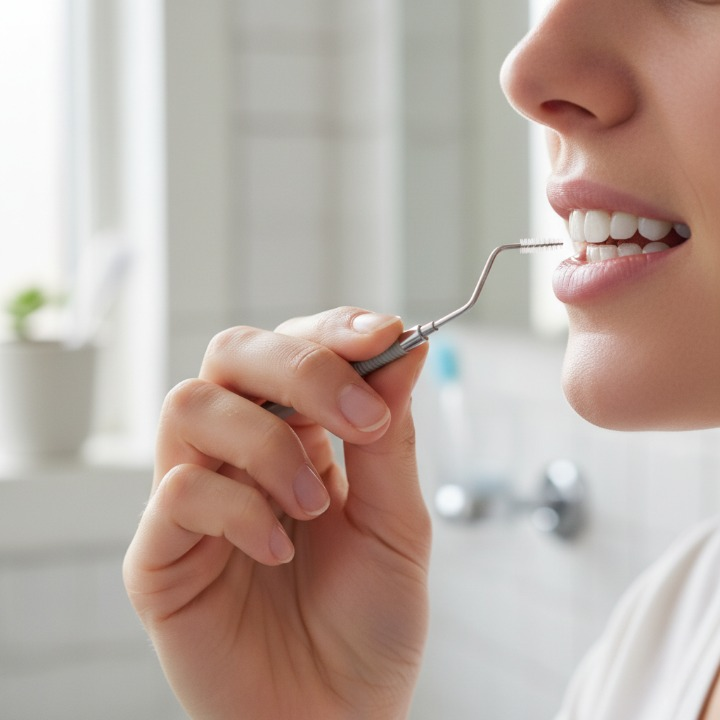
2. The Convenience Champion: Interdental Brushes (Dental Picks)
These are tiny, bottle-shaped brushes that you gently push between your teeth. Many people find them easier and more effective than floss.
Best For: People with wider gaps between teeth, braces, bridges, or implants.
How to Use Correctly: Choose a size that fits snugly but comfortably between your teeth without forcing it. Gently insert the brush and move it back and forth a few times. They come in various sizes, and your dentist can help you choose the right one.
3. The High-Tech Powerhouse: Water Flosser
A water flosser uses a targeted stream of pulsating water to blast away food debris and plaque below the gumline and between teeth.
Best For: Anyone who struggles with string floss, especially those with braces, permanent bridges, crowns, or dental implants. It’s also excellent for people with arthritis.
How to Use Correctly: Start with a low pressure setting and warm water. Lean over the sink and place the tip in your mouth. Turn it on and trace along your gumline, pausing briefly between teeth. It feels great and is incredibly effective when used as part of your routine.
4. The On-The-Go Option: Floss Picks
These small, plastic tools hold a piece of floss taut, making them easier to maneuver, especially for back teeth.
Best For: Beginners, people on the go, and those helping children with flossing.
The Caveat: They can be less effective than traditional floss because it’s harder to curve the floss properly around each tooth, and you use the same segment of floss for your entire mouth, which can spread bacteria.
The #1 Mistake People Make with Interdental Cleaning (And How to Fix It)
The biggest mistake is being too aggressive. Snapping floss hard into your gums or using a brush that’s too large causes damage, pain, and recession.
The Fix: Be gentle. The goal is to clean the tooth surface, not traumatize the gum. If your gums bleed at first, it’s often a sign of inflammation, not that you’re hurting yourself. With consistent, gentle interdental cleaning, the bleeding should stop within a week or two as your gum health improves.
FAQs About Interdental Cleaning
A water flosser is exceptionally good at removing food debris and reducing gingivitis, and for many people, it’s easier and more motivating to use. While studies show it can be as effective as traditional floss for reducing gingivitis, some dentists still consider string floss the “gold standard” for mechanically scraping away sticky plaque. The best one is the one you use consistently.
No! This is a critical sign that you need to continue. Bleeding gums are a symptom of inflammation caused by plaque. With gentle and consistent interdental cleaning, the inflammation will subside and the bleeding will stop. If bleeding persists after two weeks, see your dentist.
You should perform interdental cleaning at least once a day. Plaque takes about 24 hours to mature, so a daily disruption is key to preventing it from building up and causing problems.
This is where a water flosser truly shines. It can effectively flush out food from around brackets and wires. Interdental brushes are also excellent for cleaning around brackets and under archwires. Special orthodontic floss with a stiff end can also be used.
No. Mouthwash can help reduce bacteria but it cannot physically remove the sticky plaque biofilm and food debris that are wedged between your teeth. Think of it as a helpful addition, not a replacement, for mechanical interdental cleaning.
Ready to Conquer the 40%?
Your toothbrush is a powerful ally, but it can’t win the war on plaque alone. Embracing daily interdental cleaning is the ultimate act of prevention, protecting you from cavities and gum disease for years to come.
Have questions about which tool is right for your unique smile? Schedule a consultation with us at Core Dental Care. We’ll provide a personalized demonstration and help you build the perfect hygiene routine.